
💧 Water Collection & Management on the Homestead
Water is one of the most essential—and most overlooked—parts of homesteading. Whether you’re gardening, caring for animals, or just trying to reduce dependence on your local utility, managing your own water source can offer both security and savings.
Let’s walk through the basics of collecting, storing, and making the most of your water resources.
🌦️ Why Collect Rainwater?
Rainwater harvesting is simple, sustainable, and surprisingly effective.
Benefits include:
- Free water for gardens, animals, and cleaning
- Reduced strain on wells or city systems
- Helpful in drought-prone areas
- Encourages mindful water use
Even a modest roof can collect hundreds of gallons during a single storm.
🪣 Simple Rainwater Collection Setups
You don’t need an elaborate system to get started.
Beginner-friendly options:
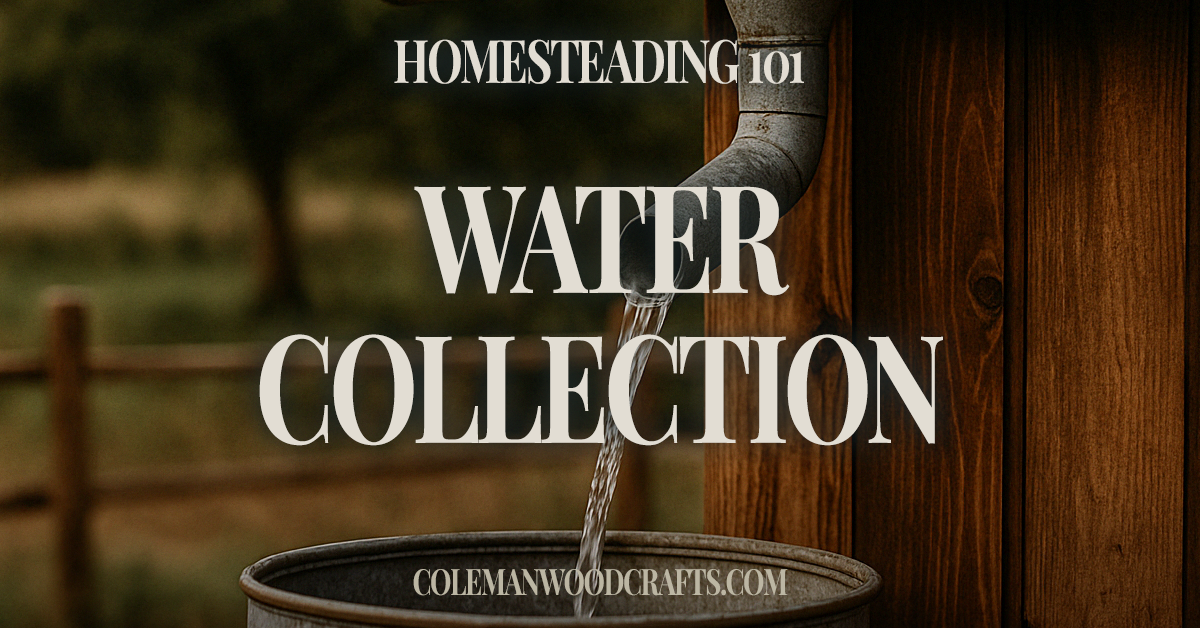
- A rain barrel connected to your gutter downspout
- A screened inlet to filter out debris
- An overflow outlet to direct excess safely away from buildings
- A spigot at the bottom for easy bucket-filling
Want more water? Link multiple barrels or install a larger cistern.
🚿 Greywater: Reusing What You Have
Greywater is gently used household water—from sinks, tubs, or laundry (not toilets).
You can reuse greywater:
- On non-edible landscape plants and trees
- To reduce overall water usage
- By installing basic diverter valves and outdoor-safe plumbing
💡 Always use biodegradable, non-toxic soaps to avoid harming your soil or plants.
💧 Watering the Garden Wisely
Efficient watering is just as important as collecting.
Tips for smart watering:
- Water early in the morning or evening to reduce evaporation
- Use drip hoses or soaker lines for deep watering
- Mulch heavily to retain moisture
- Group plants by water needs
Conservation doesn’t mean scarcity—it means stewardship.
🐓 Supplying Animals With Clean Water
All livestock need consistent access to clean, fresh water.
Tips:
- Use heated waterers in winter to prevent freezing
- Raise water buckets off the ground to reduce contamination
- Clean troughs regularly to prevent algae or illness
- Consider automatic float valves for larger herds
Water needs will vary by species and season—check daily.
🛠️ Planning for the Long Term
As your homestead grows, you may want to invest in:
- A well or hand pump
- A gravity-fed system from elevated tanks
- Underground storage for freeze protection
- Solar-powered pumps to reduce energy use
Think ahead: what would you need if the power went out for a week?
💦 Every Drop Matters
Managing your own water builds self-reliance and resilience. Whether it’s a simple rain barrel or a full-scale catchment system, you’ll gain peace of mind knowing your homestead can provide for itself—one drop at a time.
🪚 Need Help Building a Setup That Lasts?
At Coleman Woodcrafts, we supply locally milled lumber for your homestead projects. If you’re setting up a catchment system or need help housing your water supply, we’d love to help make it both functional and beautiful.
💧 Reach out today to get a quote or view examples of past water projects.