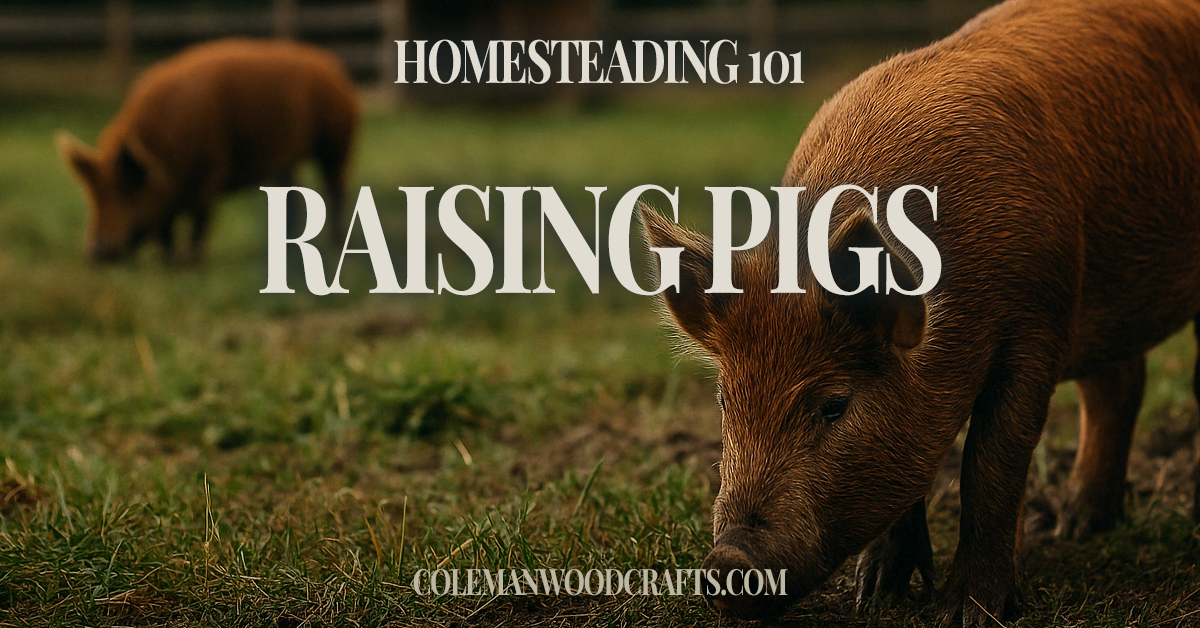
🐖 Raising Pigs on a Small Homestead
If you’ve got a little extra space, a sturdy fence, and a taste for bacon, pigs can be a surprisingly rewarding addition to your homestead. They grow quickly, thrive on scraps and pasture, and provide an incredible yield of meat in a short amount of time.
But pigs aren’t chickens—you’ll want to be well prepared before bringing them home. Here’s what you need to know.
🛠️ What You’ll Need Before They Arrive
Unlike some livestock, pigs can’t just be turned out into a field. They’re strong, clever, and determined. You’ll need:
- Strong fencing – hog panels, electric wire, or both
- Shelter from wind, rain, and sun – even a simple 3-sided structure will do
- A water source – pigs drink a lot and love to tip buckets, so automatic or heavy-duty waterers are best
- Feeding area – pigs will root and flip their troughs unless they’re anchored
Plan for mud. Even on dry land, pigs will find a way to make a wallow.
🐷 Choosing the Right Breed
There are many pig breeds suited to small-scale homesteading:
- American Guinea Hog – smaller size, great foragers, known for flavorful meat
- Berkshire – fast growers, high-quality pork
- KuneKune – docile, pasture-based, less destructive
- Yorkshire, Hampshire, Duroc – common commercial breeds, larger size
If you’re raising pigs primarily for meat, heritage breeds tend to offer better flavor and easier management on pasture.
Start with two pigs—they grow better and stay calmer in company.
🥬 Feeding & Care
Pigs are omnivores and enthusiastic eaters. Their feed will affect their growth rate and flavor.
- Feed a balanced pig grower feed (available at farm stores)
- Supplement with garden scraps, whey, milk, or cracked grains
- Avoid raw meat, moldy food, or excess salt
- Always provide fresh, clean water
Pigs will eat almost anything, but what they should eat is high-quality and balanced.
🧹 Daily Care & Chores
Pigs are actually quite clean when given enough space—but they will root, dig, and flip anything that’s not anchored.
Your daily routine:
- Check food and water
- Walk the fence line for signs of escape attempts
- Observe their behavior and condition
- Clean or rotate their area as needed
Rotate pastures if possible to reduce smell and allow the land to recover.
🐖 Butchering & Processing
Most homesteaders raise pigs for 6–8 months, until they reach butcher weight (around 250–300 lbs).
At that point, you’ll need to:
- Hire a local processor
- Or learn to do it yourself (more advanced, requires tools and skill)
- Have a freezer ready—pork yields a lot of meat
You’ll get chops, roasts, sausage, bacon, lard, and bones for broth.
🌿 More Than Meat
Raising pigs teaches patience, respect, and stewardship. They clear land, fertilize as they go, and turn leftovers into abundance. When raised well, they live good, full lives—and give generously in return.
Even if you raise pigs just once, you’ll come away with new skills, a full freezer, and a deeper sense of connection to your food.