🌾 Growing Your First Garden
Starting a garden is one of the most empowering steps you can take as a homesteader. Whether you’re on acres of open land or a sunny suburban plot, growing your own food connects you to the earth—and to the table—in the most rewarding way.
This beginner’s guide will help you build confidence, avoid burnout, and grow something delicious your first season.
📍 Start Small & Set Yourself Up for Success
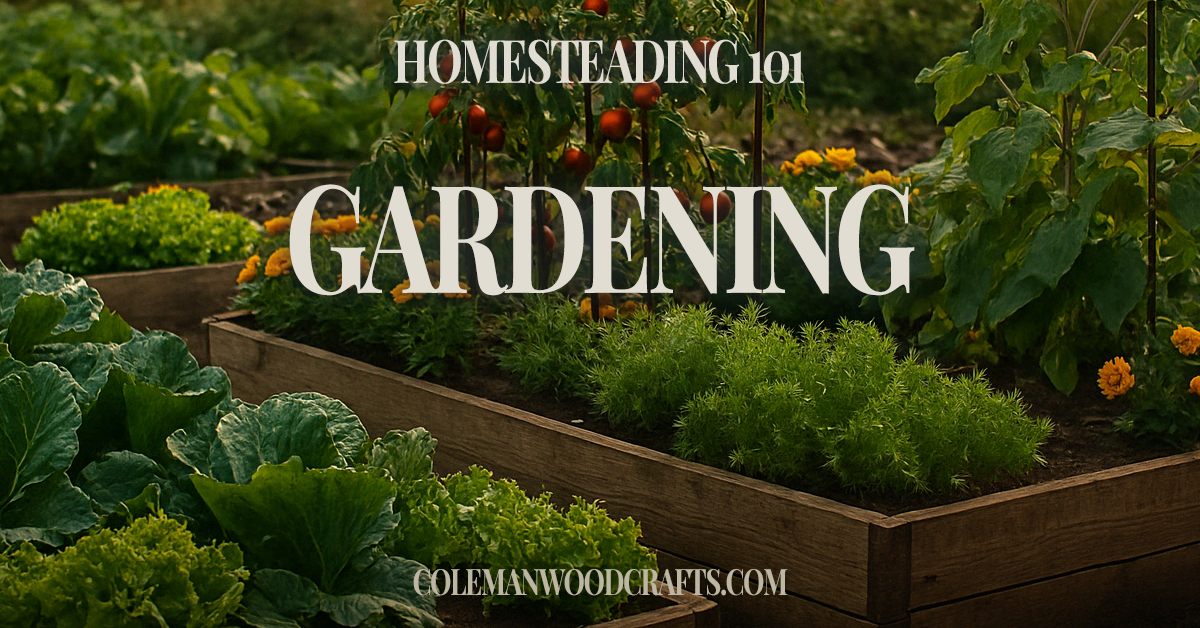
It’s tempting to go all-in right away—but one of the most common mistakes new gardeners make is starting too big. Instead, focus on a few raised beds or a 10×10 plot, and learn as you go.
- Choose a location with 6+ hours of sunlight
- Make sure it’s close to a water source
- Keep it close to the house for easy care and observation
Start with what you can water and weed in 15–30 minutes a day.
🧑🌾 What to Grow in Your First Garden
Choose vegetables that are:
- Easy to grow
- Suited to your region
- Foods you actually like to eat!
Good beginner choices include:
- 🥬 Leafy greens (lettuce, spinach, kale)
- 🍅 Tomatoes (cherry tomatoes are especially forgiving)
- 🥕 Root veggies like carrots and radishes
- 🥒 Zucchini and cucumbers
- 🌿 Culinary herbs like basil, parsley, and thyme
Stick to 5–7 crops your first year to keep things manageable.
🌱 Soil & Beds: Building the Foundation
Healthy plants start with healthy soil. You can build raised beds or grow directly in the ground.
- Test your soil (local extension offices often offer kits)
- Mix in compost, aged manure, or organic matter
- Avoid synthetic fertilizers—feed your soil, not just your plants
Pro tip: If you’re using lumber to build your beds, choose untreated wood like pine or cedar for safety.
💧 Watering & Maintenance
New gardeners often overwater or underwater. Here’s the sweet spot:
- Water deeply a few times a week rather than lightly every day
- Use mulch (straw, wood chips, or leaves) to retain moisture and prevent weeds
- Check soil moisture with your finger—if the top 2 inches are dry, it’s time to water
Weed a little every day and enjoy the process—it’s peaceful work with big payoffs.
🐛 Dealing with Pests Naturally
Pests are part of gardening, but you can manage them without harsh chemicals:
- 🐞 Attract beneficial bugs like ladybugs and lacewings
- 🌼 Plant marigolds and herbs to deter pests
- 🧼 Use simple solutions like diluted dish soap spray for aphids
Observe your garden daily—you’ll spot problems early and feel more connected to your plants.
🌻 The Joy of Harvest
Nothing compares to the first tomato you pick or the crisp lettuce that goes from garden to plate in minutes. Harvest often, and harvest young—many plants produce more when you pick regularly.
And don’t be afraid to fail a little. Every season teaches you something.
🪚 Need Help Getting Started?
At Coleman Woodcrafts, we love seeing people grow their own food—we supply lumber to help make it easy. Whether you’re building your first frame or expanding your garden with cedar beds, we’re here to support your homesteading goals.
🌱 Reach out today to request a quote or browse our DIY garden bed kits.