
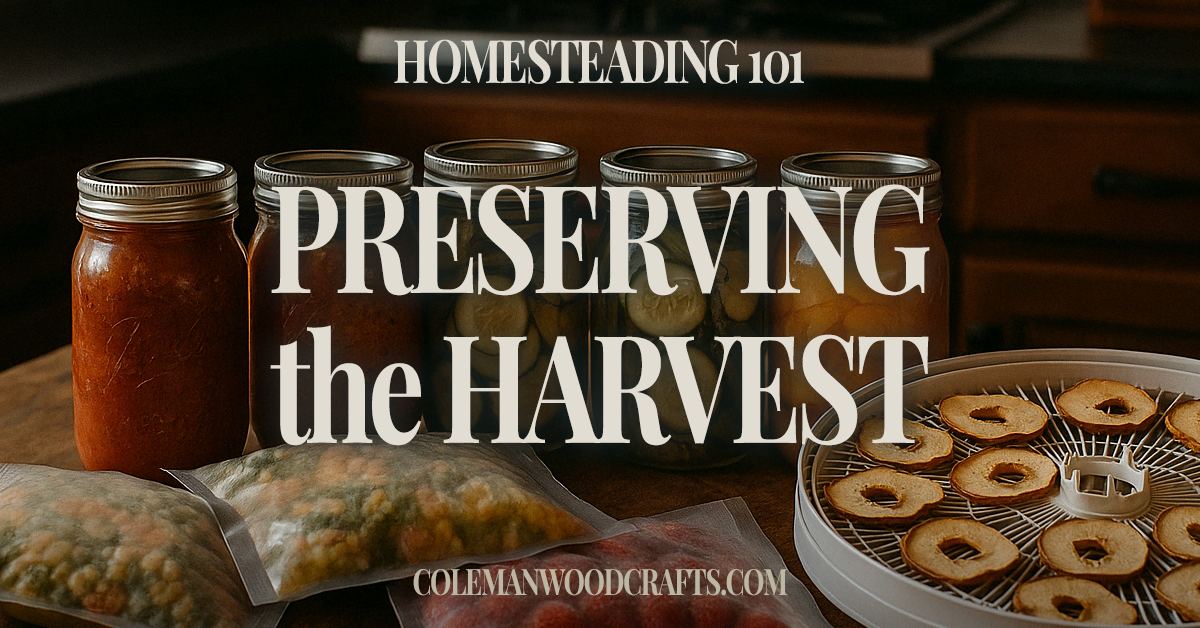
📦 Preserving the Harvest: Canning, Freezing & Dehydrating
One of the most satisfying parts of homesteading is harvesting something you’ve grown—and storing it for months to come. Preserving food isn’t just about stocking your pantry; it’s about self-reliance, reducing waste, and stretching the fruits of your labor through the seasons.
Let’s explore the three most common preservation methods: canning, freezing, and dehydrating.
🫙 Canning: Shelf-Stable Storage That Lasts
Canning is a time-honored tradition that lets you keep food safe at room temperature—no electricity required.
There are two main types:
- Water Bath Canning – for high-acid foods like jams, tomatoes, and pickles
- Pressure Canning – for low-acid foods like beans, broth, and meats
Canning basics:
- Use clean, sterilized jars and lids
- Follow recipes carefully (safe acidity levels matter)
- Label and date every jar
- Store in a cool, dark place
Start with jam or applesauce to build confidence, then work your way up to full meals in a jar.
❄️ Freezing: Fast, Simple & Versatile
Freezing is perfect for fruits, vegetables, herbs, and even baked goods.
Tips for success:
- Blanch veggies like green beans and corn before freezing to preserve texture
- Use freezer-safe bags or containers and remove as much air as possible
- Label and rotate—older items in front
- Freeze herbs in oil or water in ice cube trays for easy cooking
Freezing is often the easiest option for busy harvest days.
🌬️ Dehydrating: Lightweight & Long-Lasting
Dehydrating removes moisture to prevent spoilage, creating lightweight food that stores well and retains flavor.
Use a dehydrator or your oven to dry:
- Apple slices, banana chips, or citrus
- Herbs like basil, oregano, and thyme
- Tomatoes, mushrooms, or garlic
- Even jerky or fruit leather
Store dehydrated foods in glass jars or vacuum-sealed bags in a dark cupboard.
🧺 Preserving is More Than Just Storage
Each method has its place, and every pantry ends up with a little bit of each—jars lined up like stained-glass windows, neatly stacked freezer bags, and jars of dried herbs tucked on the shelf.
Preserving food helps you slow down and savor what the land offers. It’s about intention, rhythm, and resilience—one jar, one bag, one handful at a time.
And the best part? Every time you open that pantry door, you’re reminded: You did that.
At Coleman Woodcrafts, we believe beauty and usefulness should go hand in hand. That’s why we offer locally milled lumber for your DIY projects.
🪵 Get in touch to request something made just for you—or check out our handcrafted offerings for homegrown living.