
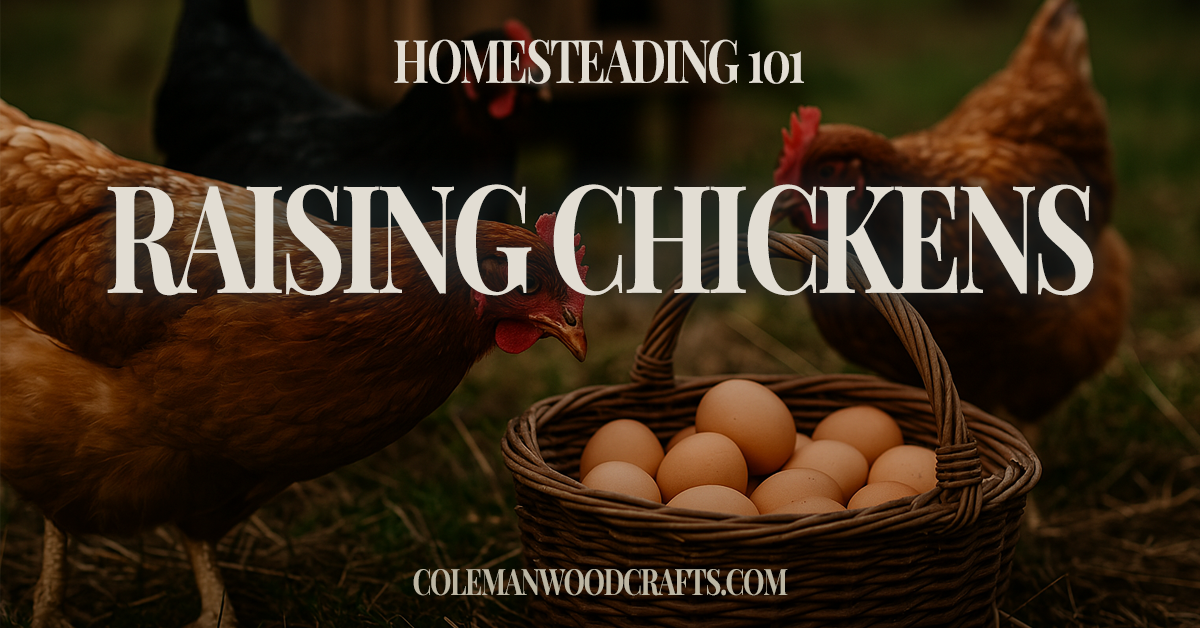
🐓 Raising Chickens: The Gateway to Homesteading
If you’re thinking about dipping your boots into the homesteading lifestyle, chickens are the perfect place to start. They’re low-maintenance, budget-friendly, and provide a steady source of fresh eggs—not to mention a whole lot of personality.
Whether you’re raising a few hens for fun or working toward food security, this guide will walk you through everything you need to get started.
🏠 Where They Live: Building or Buying a Coop
Your coop is more than just a shelter—it’s your flock’s fortress. A well-built coop should offer:
- Predator protection (think raccoons, hawks, foxes)
- Ventilation without drafts
- Nesting boxes for laying
- Roosting bars for sleeping
A small backyard coop may be all you need, but plan for at least 3–4 square feet per bird inside the coop and 8–10 square feet per bird in the run.
🐣 Choosing Your Flock
Not sure which chickens to start with? Here are some popular, beginner-friendly breeds:
- Rhode Island Red – tough birds, great layers
- Buff Orpington – sweet, fluffy, good with kids
- Barred Rock – calm and reliable
- Easter Egger – colorful eggs and curious personalities
Start with 4–6 hens—enough for consistent eggs and a happy social group.
🧺 Daily & Weekly Care
Raising chickens doesn’t take much time, but consistency is key.
Every Day:
- Feed and fresh water
- Collect eggs
- Quick health and safety check
Weekly:
- Scoop droppings under the roost
- Refresh bedding in nesting boxes
- Check for any damage to the coop or fencing
Seasonal tips:
- ❄️ In winter: Insulate with deep bedding, prevent frozen water
- ☀️ In summer: Offer shade and cold treats
- 🍂 In fall: Expect molting and a drop in egg production
🛠️ DIY or Ready-Made: The Coop Decision
Some folks like to build their own coop from scratch (or a kit), especially if they have access to local lumber. Others prefer to buy one ready-made, built for both beauty and function.
Either way, be sure to prioritize:
- Durability
- Ventilation
- Ease of cleaning
- Access for egg collection
⚠️ Common Pitfalls to Avoid
- Predators: Secure your coop with hardware cloth, not chicken wire
- Boredom: Leads to pecking and egg-eating—give them enrichment like stumps, swings, or scattered treats
- Too much mud: Wet ground can cause foot issues. Add straw, sand, or wood chips for drainage
🧑🌾 Wrap-Up: Your First Flock is Just the Beginning
Chickens are more than just egg layers—they’re part of your rhythm, your garden helpers, and your outdoor companions. With just a little prep and daily care, they’ll give you eggs, fertilizer, and a front-row seat to the joys of homesteading.
🪚 Thinking About Getting Started?
At Coleman Woodcrafts, we’ve been raising chickens for years—and building custom coops with the kind of craftsmanship that lasts. Whether you’re ready to order a coop, build one yourself with locally milled lumber, or just want to browse past projects, we’re happy to help.
🐔 Request a quote or check out our Chicken Coops page to take your first step.